
Army moving out with cheaper Robotic Combat Vehicle competition, but with a new name
In a new request for information for Unmanned Ground Commercial Robotic Vehicles, the service said it is eyeing platforms that carry a price tag below $650,000.
In a new request for information for Unmanned Ground Commercial Robotic Vehicles, the service said it is eyeing platforms that carry a price tag below $650,000.

“How can we make the science and art of one human being able to control lots of different things easy enough to where I don't have to have four operators controlling a [single] robot?” asked Lt. Gen. Robert Rasch.


Blending superior optics, advanced stabilization and AI-powered autonomy in a compact and rugged system, ASELFLIR 600 delivers unmatched intelligence, surveillance and reconnaissance (ISR) capabilities.

A day after the service unveiled a massive shake up, a two-star general’s email sheds light on additional ground combat vehicle cuts and plans to accelerate work on a Bradley replacement and future Abrams tank.

"[We’re] trying to figure out what's going to happen," an industry official told Breaking Defense. "I joke about the crystal ball, but it's kind of anybody's guess right now about what could come out."

“We don't want a robot wandering off the battlefield. We don't want one being taken over by a potential adversary,” RCCTO Director Lt. Gen. Robert Rasch told Breaking Defense.
If the service's previous RCV plans hold true, the company will begin finalizing designs ahead of additional prototype deliveries next year.



Robotic combat engineering will reduce risk to soldiers in the breach while maintaining or increasing the tempo of movement for maneuver forces.

In 2024, the US Army moved out on plans to better team up soldiers and machines on the battlefield, while facing some policy and technology challenges.
During testing this summer, one unit decided it needed three control vehicles for every two robots, where only two control vehicles had been expected.
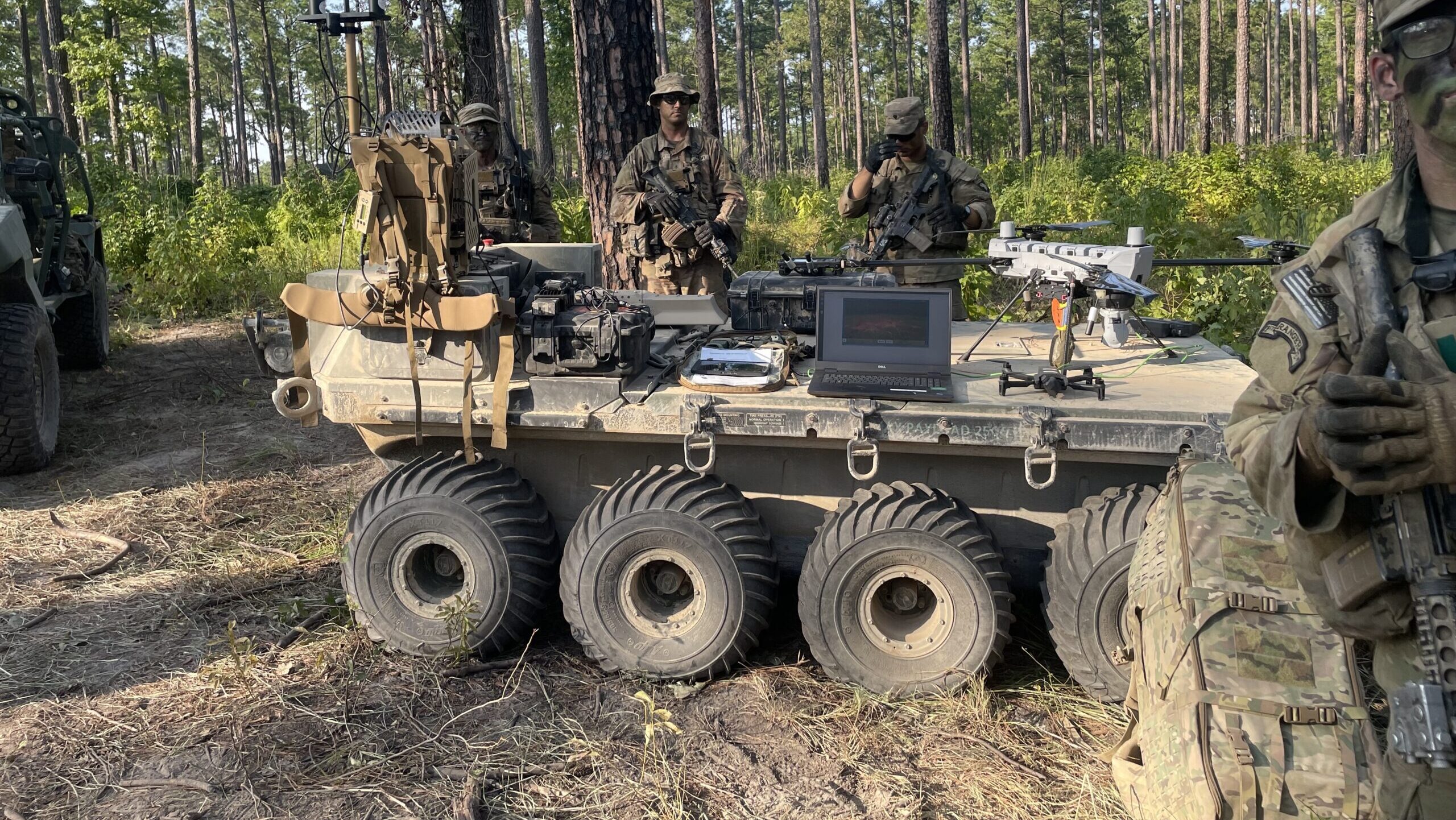
PEO CS&CSS is retaining a separate ground autonomy competition designed to field self-driving PLS trucks.
Michigan’s defense ecosystem and expertise makes it a special asset for production.
“It's a very draft requirement [with] a lot of work to do on how to refine it, but we have PLS systems – the larger tactical resupply [tucks] – and you have the S-MET and there's really a gap between the two,” said Kevin Mills.
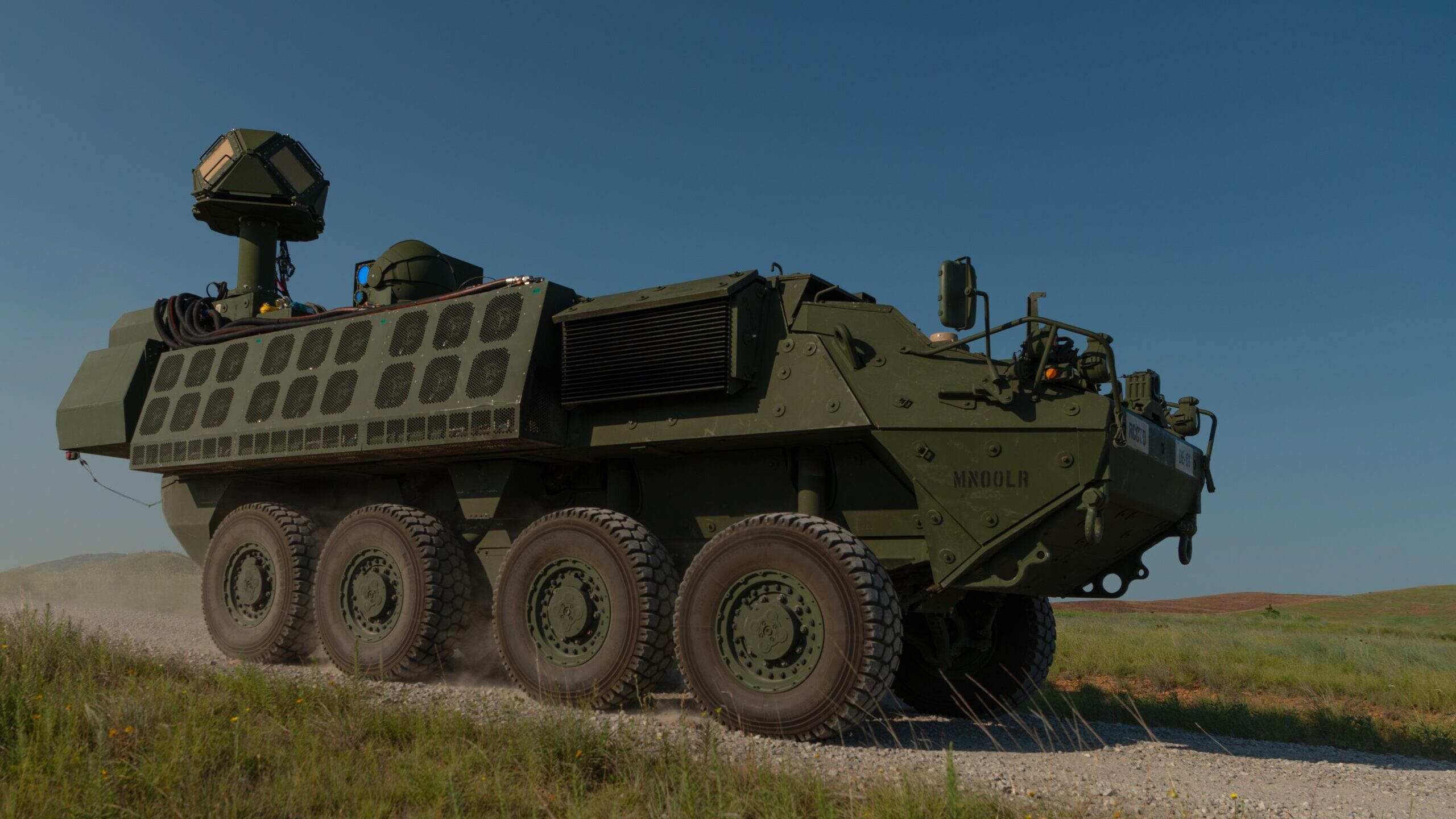
The Army is pushing for companies to integrate lasers on JLTVs, while eyeing a future where ground robots don the directed energy weapons.
"It's our first robot system like this [that] we're actually going to keep. So, I'm not surprised that there's turbulence in the key technologies, including the radio comm link, which is foundational to the whole thing," said Army acquisition head Doug Bush.

As the Army prepares to field a fleet of unmanned combat vehicles in 2028, industry is raising red flags about the service's piecemealed acquisition approach and its plan to use internally developed autonomy software over finding a working commercial solution.